TROPONIN - I (Quantity)
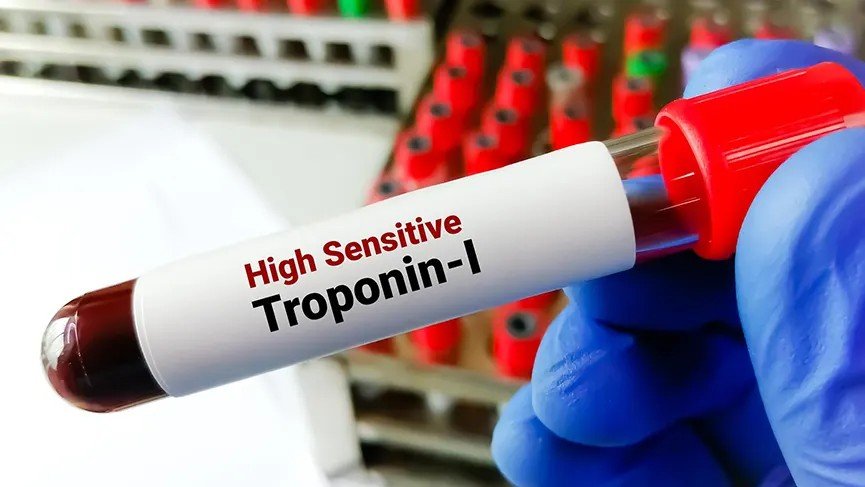
Why Is This Test Done?
COMMENTS: This is a qualitative test and hence must be interpreted with clinical condition. Due to release kinetics of Troponin T, a negative result does not rule out a cardiac infarction or myocardial cell damage with certainty. If suspicion of an infarction persists, the test should be repeated at suitable time intervals as per the guideline. A negative Trop T result must not be used as the sole diagnosti criterion. Troponin T assay can be used as an aid in differential diagnosis of acute coronary syndrome (ACS) to identify necrosis (e.g acute myocardial infarction (AMI). > Test is indicated for risk stratification of patients presenting with ACS and for cardiac risk in patients with chronic renal failure > It is cardio specific and sensitive marker for myocardial damage. In cases of AMI, Troponin T levels in serum rise about 3 to 4 hrs after the occurrence of cardiac symptoms and can remain elevated for up to 14 days. It is an independent prognostic marker for predicting near, mid and even long term outcome of patients with ACS. Useful tool for guiding anti thrombotic therapy (low molecular weight heparins) Myocardial cell injury leading to elevated Troponin T can also occur in congestive cardiac failure, cardiomyopathy, myocarditis, heart contusion, renal failure, lung embolism, stroke, left ventricular dysfunction in septic shock, and interventional therapy like cardiac surgery, non -cardiac surgery, PTCA and drug induced cardio toxicity.
Interpretation
Within reference range
No evidence of heart muscle damage
Slightly elevated
Mild or recent heart injury possible
Significantly elevated
Severe heart injury or ongoing heart attack possible
Other factors affecting levels
Kidney disease, certain medications, or other factors may also affect troponin I levels and should be considered in the interpretation of results.
Preparation Instructions
No special preparation is required